Why the Best Cars Can’t Be Explained on a Spec Sheet
Why Numbers Fail to Explain Luxury
In the automotive world, numbers dominate conversations. Horsepower, torque, acceleration times, engine displacement—spec sheets are treated as truth. They are measurable, comparable, and easy to communicate. Yet for anyone who has truly experienced luxury vehicles, numbers rarely explain why one car feels unforgettable while another feels merely impressive.
Luxury does not live on paper.
It lives in perception, emotion, and subtlety.
Two vehicles can share similar statistics and deliver completely different experiences. One feels tense, demanding attention at every second. The other feels calm, intuitive, almost invisible in how it supports the driver. That difference cannot be reduced to numbers.
Luxury is not what a car does.
Luxury is how a car makes you feel while doing it.
The Misconception: Features Equal Luxury
Many assume luxury is defined by features—screens, ambient lighting, massage seats, sound systems, driver assists. While these elements contribute to comfort, they are not luxury by themselves.
Features are tools.
Luxury is coherence.
A vehicle overloaded with technology but poorly balanced can feel overwhelming. Another with fewer visible features can feel deeply refined because every element works together seamlessly.
True luxury is not excess.
It is intentional design.
The Invisible Engineering of Comfort
What makes a luxury car feel different often goes unnoticed—until you step back into a non-luxury vehicle.
Luxury engineering prioritizes:
Noise isolation
Vibration reduction
Predictable responses
Smooth transitions
When done correctly, the driver stops noticing the car entirely. There is no struggle, no correction, no tension. The vehicle simply supports movement.
This invisibility is intentional. Luxury engineers spend thousands of hours refining details that will never appear in brochures because they exist solely for feeling, not marketing.
Silence as a Luxury Language
Silence is not emptiness—it is control.
Luxury vehicles treat sound with precision. Road noise, wind, engine feedback, and cabin acoustics are tuned rather than eliminated. The result is not silence, but balance.
Inside a refined cabin:
Conversations feel natural
Music sounds fuller
Long drives feel shorter
Silence reduces mental fatigue, allowing the driver to arrive more focused than when they left.
This is not accidental. It is engineered calm.
The Emotional Weight of Materials
Materials communicate before they are touched.
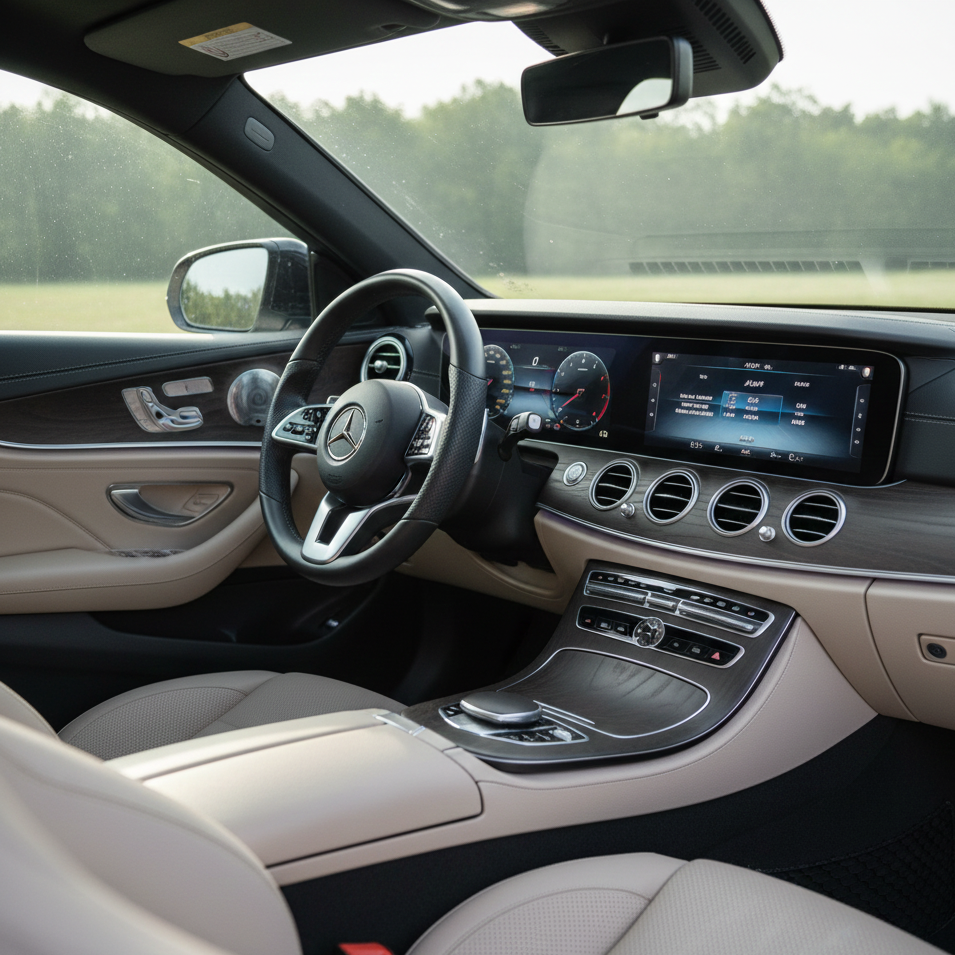
Leather grain, stitching patterns, metal finishes, and soft-touch surfaces all influence perception instantly. Cheap materials create subconscious resistance. Premium materials invite trust.
Luxury interiors are designed to:
Feel reassuring
Age gracefully
Respond predictably to use
The goal is not to impress once, but to feel right every time.
Why Driving Feel Matters More Than Speed
Speed excites briefly.
Driving feel endures.
Luxury vehicles are calibrated to feel stable, confident, and consistent under varying conditions. Steering feedback is deliberate. Throttle response is smooth rather than aggressive. Braking is progressive instead of abrupt.
These characteristics allow the driver to relax into the experience rather than constantly manage it.
Luxury driving does not demand effort.
It rewards trust.
The Difference Between Control and Domination
Some vehicles try to dominate the driver with intensity—loud exhausts, stiff suspensions, hyper-responsive controls. This creates excitement but also tension.
Luxury vehicles prioritize control over domination.
The driver feels:
Supported, not challenged
Confident, not rushed
Capable, not pressured
This distinction becomes critical over time. What feels thrilling for 15 minutes can become exhausting over hours.
Luxury is sustainable enjoyment.
How Luxury Vehicles Shape Behavior
Environment influences behavior instantly.
Inside a luxury vehicle:
Movements become slower
Decisions feel more deliberate
Interactions feel calmer
Drivers often don’t realize this shift, but others do. Presence changes subtly when stress is removed from movement.
Luxury vehicles don’t amplify ego.
They stabilize demeanor.
The Role of Design Consistency
Luxury fails when design elements compete.
True luxury vehicles maintain consistency across:
Exterior lines
Interior layout
Driving dynamics
Brand philosophy
Everything feels part of a single vision rather than a collection of trends. This cohesion creates trust.
When a vehicle feels unified, the driver feels secure.
Why Luxury Ages Better Than Trend-Based Cars
Trends fade. Refinement lasts.
Luxury design avoids extremes. Lines are balanced rather than exaggerated. Interfaces are intuitive rather than flashy. The result is a vehicle that feels relevant years later.
This longevity is not nostalgia—it is restraint.
Luxury vehicles are designed to remain desirable, not just noticeable.
Emotional Memory and the Luxury Experience
People rarely remember exact performance numbers.
They remember moments.
How a car felt during a late-night drive.
How relaxed they were after a long day.
How confident they felt stepping out of the vehicle.
Luxury creates emotional memory through comfort, consistency, and trust.
These memories define brand loyalty far more than specifications ever could.
Why Luxury Is Personal, Not Universal
Luxury is not objective.
Some drivers value silence. Others value engagement. Some want authority; others want agility. Luxury exists where preference meets refinement.
This is why luxury cannot be standardized.
The right luxury car is the one that aligns with the driver’s temperament—not the one with the highest price tag.
The Evolution of Luxury Expectations
Modern luxury drivers are less interested in status signaling and more focused on experience quality.
They ask:
Does this car reduce stress?
Does it fit my lifestyle?
Does it feel intuitive?
Luxury has shifted from display to usability.
The most luxurious cars today are those that integrate seamlessly into life rather than dominate it.
Why Access Has Become the New Luxury
Ownership once symbolized success. Today, access symbolizes freedom.
Access allows:
Variety without commitment
Choice without obligation
Experience without maintenance
Luxury fleets exist because modern drivers value flexibility more than possession.
The experience matters more than the asset.
The Final Truth: Luxury Is Felt, Not Explained
No spec sheet can explain why one car feels calming and another feels chaotic. No performance metric can capture emotional ease.
Luxury is sensed:
In how your shoulders relax
In how quiet your thoughts become
In how natural movement feels
Luxury is not loud.
Luxury is not aggressive.
Luxury is effortless alignment.
And once you experience it, numbers stop mattering.